 Image 1 of 1
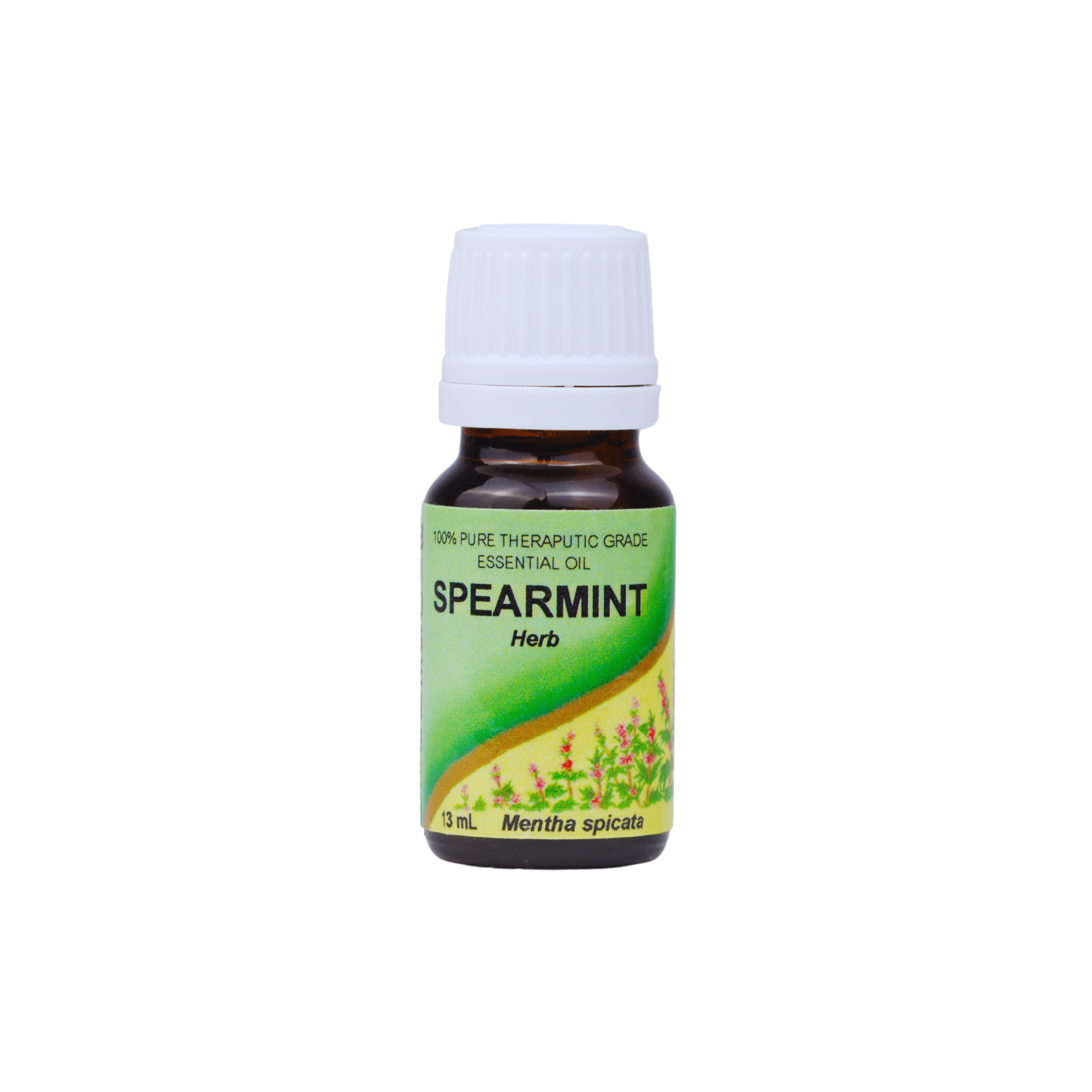
Botanical Name: Mentha spicata Botanical Family: Lamiaceae (Labiatae)
· Extraction Method: Steam Distillation
· Part Used: Flowering Tops
· Aroma Note: Top
Spearmint is the "kinder, gentler" sibling of Peppermint. While Peppermint is defined by its high menthol content—giving it that icy, piercing "kick"—Spearmint contains almost no menthol. Instead, its primary component is l-carvone, which gives it a much sweeter, softer, and more "green" aroma (reminiscent of the classic garden mint or spearmint gum). It is native to the Mediterranean but has been naturalized worldwide. Because it is less "aggressive" than Peppermint, it is often the preferred mint for children and those with sensitive systems.
Antiseptic, Antispasmodic, Carminative, Cephalic, Cholagogue, Digestive, Diuretic, Expectorant, Stimulant, Stomachic, Tonic.
· Skin: While not a primary skin oil, it can be used in very low dilutions to relieve itching and can act as a mild local anesthetic for minor skin irritations.
· Respiratory: Helps with catarrh, sinusitis, and bronchial congestion. It is less likely to cause the "rebound" effect of over-stimulating the mucous membranes that Peppermint sometimes can.
· Digestive: The gentle digestive aid. Excellent for flatulence, indigestion, nausea, and "butterflies" in the stomach. It is particularly helpful for childhood tummy aches (when properly diluted).
· Nervous System: Fatigue, mental strain, and headaches. It provides a "soft" mental lift—clearing away brain fog without the intense "jolt" of caffeine-like stimulation.
· Metabolism: Often used in blends to support the release of fat and toxins from the body.
Spearmint is the "Oil of Confident Speech." It is specifically used to help people express their thoughts and feelings with clarity and grace. It is perfect for those who feel "tongue-tied" or who struggle to find the right words under pressure. Spearmint helps to dissolve the mental blocks that prevent us from communicating our truth, providing a sense of lightheartedness and ease.
1. The "Tummy-Tamer" Rub: Mix 1 drop of Spearmint with a teaspoon of carrier oil. Massage onto the abdomen in a clockwise direction to ease bloating or nervous indigestion.
2. The "Sweet Focus" Diffuser: Diffuse 4 drops of Spearmint and 2 drops of Rosemary. This creates an environment of sharp mental focus that feels fresh and inviting rather than clinical.
3. Refreshing Morning Shower: Place 1 drop of Spearmint on a facecloth and keep it near your face (but away from the eyes) while showering. The sweet steam is incredibly uplifting and helps you "wake up" the senses gently.
The "Bright Idea" Blend To encourage creative flow and clear communication during meetings or brainstorming
· 3 drops Spearmint
· 3 drops Lemon
· 2 drops Bergamot
Basil, Bergamot, Eucalyptus, Jasmine, Lavender, Lemon, Rosemary, and Rosewood.
Generally non-toxic, non-irritant, and non-sensitizing. It is a much safer alternative to Peppermint for use with children and the elderly. However, it should still be used in moderation and properly diluted for topical application. As with most essential oils, avoid during the first trimester of pregnancy.
Available sizes: 13ml
Botanical Name: Mentha spicata Botanical Family: Lamiaceae (Labiatae)
· Extraction Method: Steam Distillation
· Part Used: Flowering Tops
· Aroma Note: Top
Spearmint is the "kinder, gentler" sibling of Peppermint. While Peppermint is defined by its high menthol content—giving it that icy, piercing "kick"—Spearmint contains almost no menthol. Instead, its primary component is l-carvone, which gives it a much sweeter, softer, and more "green" aroma (reminiscent of the classic garden mint or spearmint gum). It is native to the Mediterranean but has been naturalized worldwide. Because it is less "aggressive" than Peppermint, it is often the preferred mint for children and those with sensitive systems.
Antiseptic, Antispasmodic, Carminative, Cephalic, Cholagogue, Digestive, Diuretic, Expectorant, Stimulant, Stomachic, Tonic.
· Skin: While not a primary skin oil, it can be used in very low dilutions to relieve itching and can act as a mild local anesthetic for minor skin irritations.
· Respiratory: Helps with catarrh, sinusitis, and bronchial congestion. It is less likely to cause the "rebound" effect of over-stimulating the mucous membranes that Peppermint sometimes can.
· Digestive: The gentle digestive aid. Excellent for flatulence, indigestion, nausea, and "butterflies" in the stomach. It is particularly helpful for childhood tummy aches (when properly diluted).
· Nervous System: Fatigue, mental strain, and headaches. It provides a "soft" mental lift—clearing away brain fog without the intense "jolt" of caffeine-like stimulation.
· Metabolism: Often used in blends to support the release of fat and toxins from the body.
Spearmint is the "Oil of Confident Speech." It is specifically used to help people express their thoughts and feelings with clarity and grace. It is perfect for those who feel "tongue-tied" or who struggle to find the right words under pressure. Spearmint helps to dissolve the mental blocks that prevent us from communicating our truth, providing a sense of lightheartedness and ease.
1. The "Tummy-Tamer" Rub: Mix 1 drop of Spearmint with a teaspoon of carrier oil. Massage onto the abdomen in a clockwise direction to ease bloating or nervous indigestion.
2. The "Sweet Focus" Diffuser: Diffuse 4 drops of Spearmint and 2 drops of Rosemary. This creates an environment of sharp mental focus that feels fresh and inviting rather than clinical.
3. Refreshing Morning Shower: Place 1 drop of Spearmint on a facecloth and keep it near your face (but away from the eyes) while showering. The sweet steam is incredibly uplifting and helps you "wake up" the senses gently.
The "Bright Idea" Blend To encourage creative flow and clear communication during meetings or brainstorming
· 3 drops Spearmint
· 3 drops Lemon
· 2 drops Bergamot
Basil, Bergamot, Eucalyptus, Jasmine, Lavender, Lemon, Rosemary, and Rosewood.
Generally non-toxic, non-irritant, and non-sensitizing. It is a much safer alternative to Peppermint for use with children and the elderly. However, it should still be used in moderation and properly diluted for topical application. As with most essential oils, avoid during the first trimester of pregnancy.
Available sizes: 13ml