 Image 1 of 1
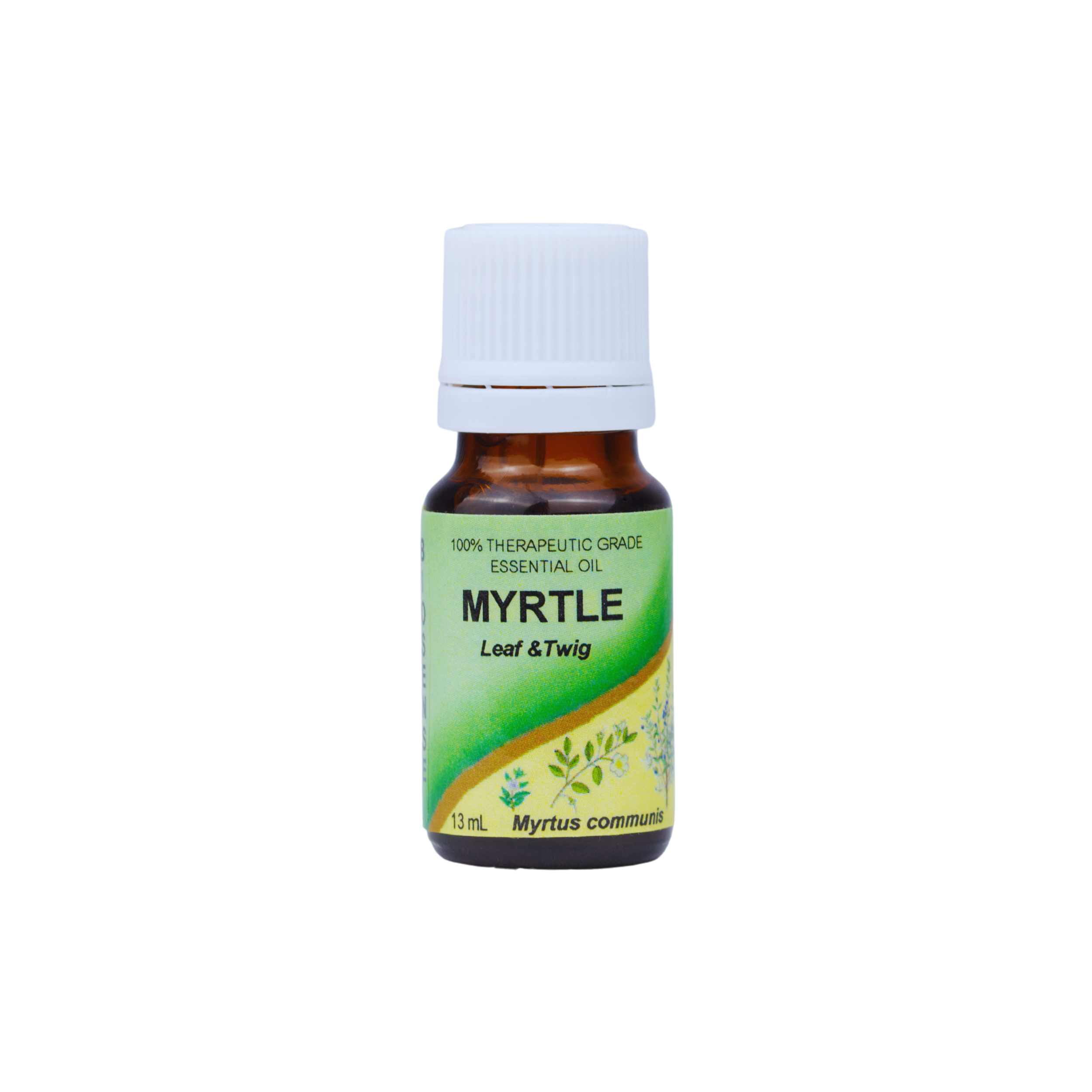
Botanical Name: Myrtus communis Botanical Family: Myrtaceae
· Extraction Method: Steam Distillation
· Part Used: Leaves and Twigs
· Aroma Note: Middle
Myrtle is a fragrant evergreen shrub with star-like white flowers, native to the Mediterranean and North Africa. In Greek mythology, it was sacred to Aphrodite, the goddess of love, and has long been a symbol of purity and innocence (often used in bridal bouquets). The oil has a clear, fresh, and camphorous aroma—somewhat similar to Eucalyptus but much sweeter and more delicate. It is often considered the "gentle cousin" of the Myrtaceae family, making it an excellent choice for those who find stronger oils too harsh.
Anticatarrhal, Antiseptic (urinary and pulmonary), Astringent, Bactericidal, Expectorant, Hemostatic, Sedative.
· Skin: Acne, large pores, and oily skin. It is an excellent astringent that helps to balance "congested" skin and can also be used to treat hemorrhoids due to its toning effect on the veins.
· Respiratory: Bronchitis, catarrh, and dry coughs. Myrtle is particularly famous for its effectiveness with children and the elderly who suffer from chronic chest congestion, as it is less irritating than Eucalyptus or Tea Tree.
· Genito-Urinary: Cystitis and urinary tract infections. It acts as a mild internal disinfectant for the urinary system.
· Immune System: Infectious diseases, especially those involving the lungs or sinuses.
· Nervous System: Insomnia and nervous tension. Unlike many other camphorous oils which are stimulating, Myrtle has a sedative quality that helps calm a racing mind.
Myrtle is the "Oil of Divine Love." It helps to clear the "inner landscape" of ego-driven conflict and resentment. It is particularly helpful for those who struggle with addictive patterns or self-defeating behaviors. It encourages a sense of harmony and helps the individual align their personal will with their higher purpose.
1. Gentle Chest Rub (for children): Mix 1 drop of Myrtle with 1 teaspoon of carrier oil. Gently massage into the chest and back to help ease a nighttime cough and promote restful sleep.
2. Facial Toner for Oily Skin: Add 5 drops of Myrtle to 50ml of Rosewater. Use as a morning spritz to tighten pores and reduce excess sebum production.
3. The "Better Sleep" Diffuser: Diffuse 3 drops of Myrtle and 3 drops of Lavender in the evening. It clears the respiratory tract while simultaneously calming the nervous system—a rare and helpful combination for sleepers with allergies.
The "Clear & Calm" Blend Diffuse during the winter months to support the lungs without over-stimulating the senses
· 4 drops Myrtle
· 3 drops Lemon
· 2 drops Frankincense
Bergamot, Clary Sage, Clove, Eucalyptus, Hyssop, Lavender, Lemon, Lemongrass, Pine, Rosemary, and Spearmint.
Generally non-toxic, non-irritant, and non-sensitizing. It is considered one of the safest oils for use with children (over the age of 2) and the elderly when properly diluted. However, as with all essential oils, it is best to avoid use during the first trimester of pregnancy.
Available sizes: 13ml
Botanical Name: Myrtus communis Botanical Family: Myrtaceae
· Extraction Method: Steam Distillation
· Part Used: Leaves and Twigs
· Aroma Note: Middle
Myrtle is a fragrant evergreen shrub with star-like white flowers, native to the Mediterranean and North Africa. In Greek mythology, it was sacred to Aphrodite, the goddess of love, and has long been a symbol of purity and innocence (often used in bridal bouquets). The oil has a clear, fresh, and camphorous aroma—somewhat similar to Eucalyptus but much sweeter and more delicate. It is often considered the "gentle cousin" of the Myrtaceae family, making it an excellent choice for those who find stronger oils too harsh.
Anticatarrhal, Antiseptic (urinary and pulmonary), Astringent, Bactericidal, Expectorant, Hemostatic, Sedative.
· Skin: Acne, large pores, and oily skin. It is an excellent astringent that helps to balance "congested" skin and can also be used to treat hemorrhoids due to its toning effect on the veins.
· Respiratory: Bronchitis, catarrh, and dry coughs. Myrtle is particularly famous for its effectiveness with children and the elderly who suffer from chronic chest congestion, as it is less irritating than Eucalyptus or Tea Tree.
· Genito-Urinary: Cystitis and urinary tract infections. It acts as a mild internal disinfectant for the urinary system.
· Immune System: Infectious diseases, especially those involving the lungs or sinuses.
· Nervous System: Insomnia and nervous tension. Unlike many other camphorous oils which are stimulating, Myrtle has a sedative quality that helps calm a racing mind.
Myrtle is the "Oil of Divine Love." It helps to clear the "inner landscape" of ego-driven conflict and resentment. It is particularly helpful for those who struggle with addictive patterns or self-defeating behaviors. It encourages a sense of harmony and helps the individual align their personal will with their higher purpose.
1. Gentle Chest Rub (for children): Mix 1 drop of Myrtle with 1 teaspoon of carrier oil. Gently massage into the chest and back to help ease a nighttime cough and promote restful sleep.
2. Facial Toner for Oily Skin: Add 5 drops of Myrtle to 50ml of Rosewater. Use as a morning spritz to tighten pores and reduce excess sebum production.
3. The "Better Sleep" Diffuser: Diffuse 3 drops of Myrtle and 3 drops of Lavender in the evening. It clears the respiratory tract while simultaneously calming the nervous system—a rare and helpful combination for sleepers with allergies.
The "Clear & Calm" Blend Diffuse during the winter months to support the lungs without over-stimulating the senses
· 4 drops Myrtle
· 3 drops Lemon
· 2 drops Frankincense
Bergamot, Clary Sage, Clove, Eucalyptus, Hyssop, Lavender, Lemon, Lemongrass, Pine, Rosemary, and Spearmint.
Generally non-toxic, non-irritant, and non-sensitizing. It is considered one of the safest oils for use with children (over the age of 2) and the elderly when properly diluted. However, as with all essential oils, it is best to avoid use during the first trimester of pregnancy.
Available sizes: 13ml