 Image 1 of 1
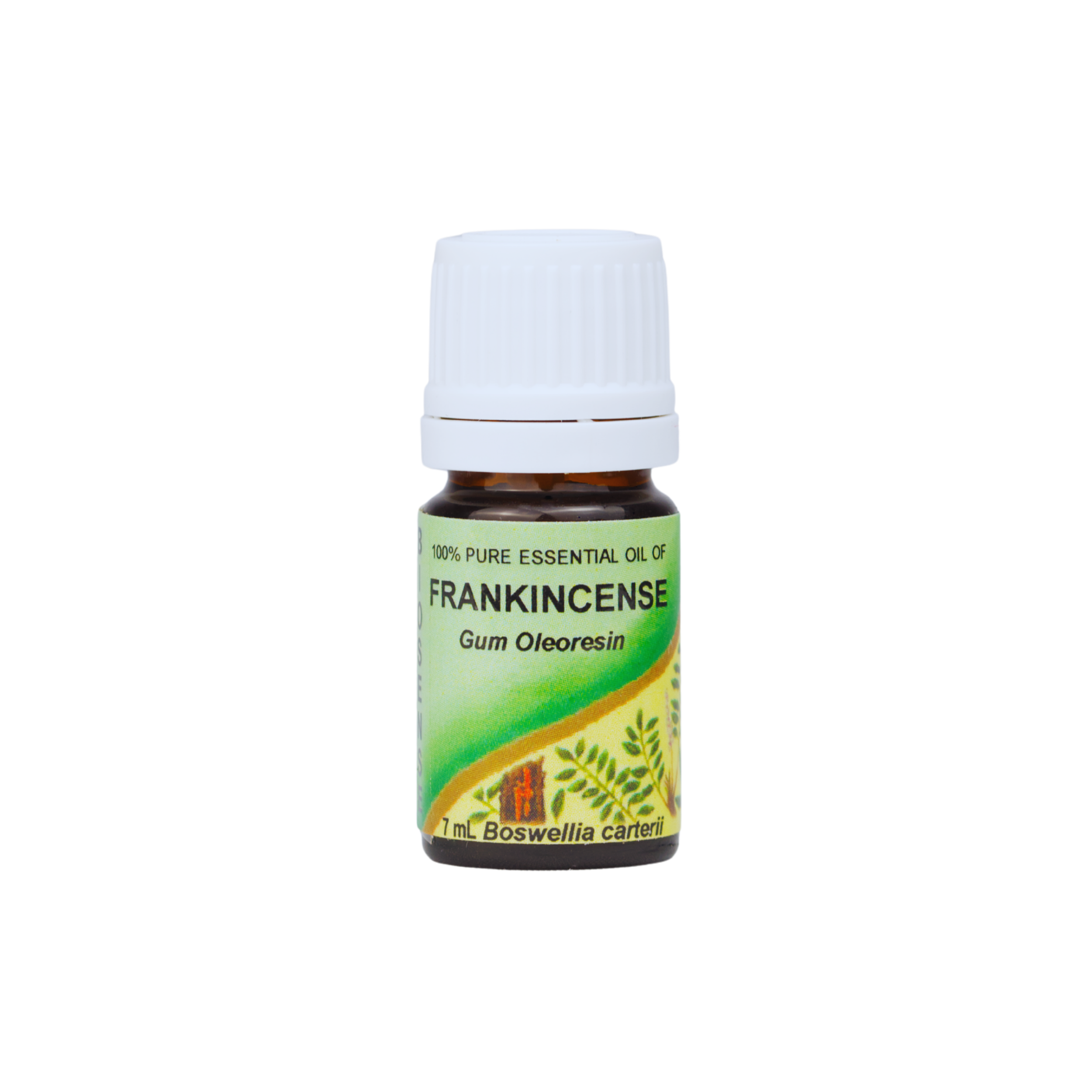
Botanical Name:Boswellia carteriiBotanical Family: Burseraceae
· Extraction Method: Steam Distillation
· Part Used: Resin (Gum)
· Aroma Note: Base
Frankincense, also known as Olibanum, is a small tree that grows in the arid regions of North Africa and the Arab Peninsula. When the bark is wounded, it bleeds a milky white resin that hardens into "tears." Highly prized for thousands of years, it was once considered more valuable than gold. The aroma is hauntingly beautiful—woody, spicy, and balsamic, with a distinct citrus top note and a deep, incense-like dry down.
Antiseptic, Anti-inflammatory, Astringent, Carminative, Cicatrizant, Cytophylactic, Digestive, Diuretic, Emmenagogue, Expectorant, Sedative, Tonic, Uterine, Vulnerary.
· Skin: One of the best oils for mature or sun-damaged skin. It is cytophylactic, meaning it encourages cell regeneration. It is excellent for wrinkles, scars, and wound healing.
· Respiratory: Asthma, bronchitis, catarrh, and laryngitis. It has a remarkable effect on the breath, helping to slow it down and deepen it, making it ideal for easing shortness of breath.
· Digestive: Occasionally used to settle an upset stomach and reduce inflammation in the gut.
· Circulatory/Muscular: Helps to soothe inflamed joints and is often used in blends for rheumatoid arthritis.
· Genito-Urinary: Acts as a tonic for the uterus and can help reduce heavy menstrual flow.
· Nervous System: Anxiety, nervous tension, and postnatal depression. It is the premier oil for calming the mind and inducing a meditative state.
Frankincense is the "Oil of Truth." It helps to pull back the veil of deception and allows the soul to connect with its inner light. It is deeply grounding and is used to sever ties with the past that are no longer serving a person. It is a powerful protector of the spirit, offering comfort to those who feel vulnerable or abandoned.
1. Anti-Aging Face Serum: Add 2 drops of Frankincense to 10ml of Jojoba or Apricot Kernel. Apply nightly to help firm the skin and reduce the appearance of fine lines.
2. Meditation Support: Place 1 drop in the palms of your hands, rub them together, and cup them over your nose. Take five deep breaths before beginning meditation, prayer, or yoga practice to center the mind.
3. Scar Healing Salve: Mix 3 drops with a teaspoon of Shea butter and apply to healing wounds or stretch marks to support healthy tissue regeneration.
The "Sacred Stillness" Blend - Add to a diffuser to create a peaceful, contemplative atmosphere
· 4 drops Frankincense
· 3 drops Cedarwood
· 3 drops Bergamot
Basil, Bergamot, Black Pepper, Geranium, Lavender, Lemon, Myrrh, Neroli, Orange, Pine, Rose, Sandalwood, and Vetiver.
Generally non-toxic, non-irritant, and non-sensitizing. It is one of the safest oils in aromatherapy. However, like most oils, it is best to avoid use during the first trimester of pregnancy. Always perform a patch test before topical use.
Available sizes: 7ml
Botanical Name:Boswellia carteriiBotanical Family: Burseraceae
· Extraction Method: Steam Distillation
· Part Used: Resin (Gum)
· Aroma Note: Base
Frankincense, also known as Olibanum, is a small tree that grows in the arid regions of North Africa and the Arab Peninsula. When the bark is wounded, it bleeds a milky white resin that hardens into "tears." Highly prized for thousands of years, it was once considered more valuable than gold. The aroma is hauntingly beautiful—woody, spicy, and balsamic, with a distinct citrus top note and a deep, incense-like dry down.
Antiseptic, Anti-inflammatory, Astringent, Carminative, Cicatrizant, Cytophylactic, Digestive, Diuretic, Emmenagogue, Expectorant, Sedative, Tonic, Uterine, Vulnerary.
· Skin: One of the best oils for mature or sun-damaged skin. It is cytophylactic, meaning it encourages cell regeneration. It is excellent for wrinkles, scars, and wound healing.
· Respiratory: Asthma, bronchitis, catarrh, and laryngitis. It has a remarkable effect on the breath, helping to slow it down and deepen it, making it ideal for easing shortness of breath.
· Digestive: Occasionally used to settle an upset stomach and reduce inflammation in the gut.
· Circulatory/Muscular: Helps to soothe inflamed joints and is often used in blends for rheumatoid arthritis.
· Genito-Urinary: Acts as a tonic for the uterus and can help reduce heavy menstrual flow.
· Nervous System: Anxiety, nervous tension, and postnatal depression. It is the premier oil for calming the mind and inducing a meditative state.
Frankincense is the "Oil of Truth." It helps to pull back the veil of deception and allows the soul to connect with its inner light. It is deeply grounding and is used to sever ties with the past that are no longer serving a person. It is a powerful protector of the spirit, offering comfort to those who feel vulnerable or abandoned.
1. Anti-Aging Face Serum: Add 2 drops of Frankincense to 10ml of Jojoba or Apricot Kernel. Apply nightly to help firm the skin and reduce the appearance of fine lines.
2. Meditation Support: Place 1 drop in the palms of your hands, rub them together, and cup them over your nose. Take five deep breaths before beginning meditation, prayer, or yoga practice to center the mind.
3. Scar Healing Salve: Mix 3 drops with a teaspoon of Shea butter and apply to healing wounds or stretch marks to support healthy tissue regeneration.
The "Sacred Stillness" Blend - Add to a diffuser to create a peaceful, contemplative atmosphere
· 4 drops Frankincense
· 3 drops Cedarwood
· 3 drops Bergamot
Basil, Bergamot, Black Pepper, Geranium, Lavender, Lemon, Myrrh, Neroli, Orange, Pine, Rose, Sandalwood, and Vetiver.
Generally non-toxic, non-irritant, and non-sensitizing. It is one of the safest oils in aromatherapy. However, like most oils, it is best to avoid use during the first trimester of pregnancy. Always perform a patch test before topical use.
Available sizes: 7ml