 Image 1 of 1
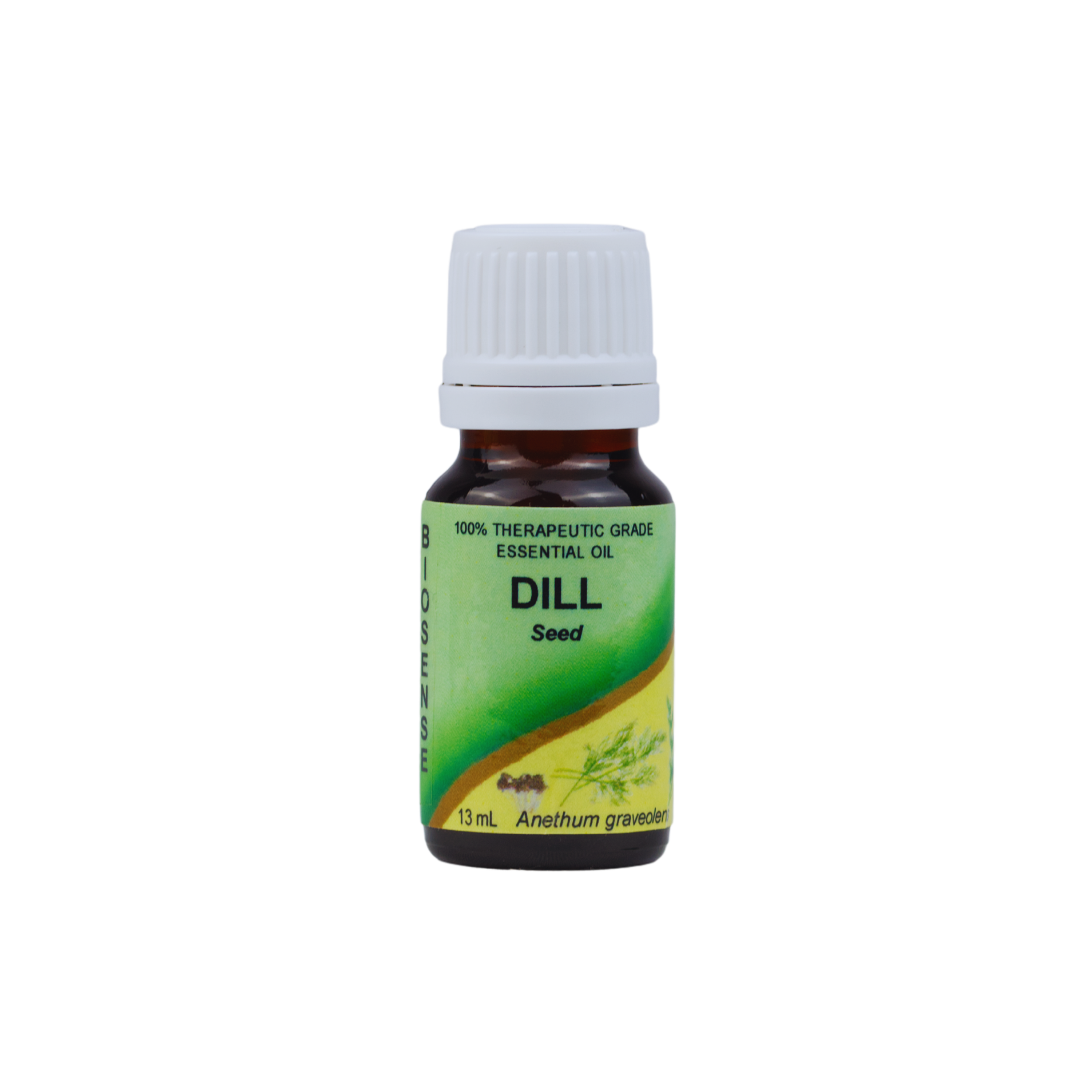
Botanical Name: Anethum graveolens Botanical Family: Apiaceae (Umbelliferae)
· Extraction Method: Steam Distillation
· Part Used: Seeds (sometimes the whole herb/weed)
· Aroma Note: Middle
Dill is a hardy annual herb with feathery green leaves and yellow umbel flowers. While the "Dill Weed" oil is often used in culinary flavoring, the "Dill Seed" oil is preferred in aromatherapy for its therapeutic potency. It has a fresh, spicy, and slightly sweet aroma that is instantly recognizable. Historically, it was used as a "charm" against witchcraft and as a staple remedy for digestive upset in infants (Gripe Water).
Antispasmodic, Bactericidal, Carminative, Digestive, Disinfectant, Emmenagogue, Galactagogue, Hypotensive, Stimulant (digestive), Stomachic.
· Skin: Occasionally used to promote the healing of small wounds and to assist in clearing up skin congestion, though its primary use is internal/digestive.
· Respiratory: Helps to ease bronchial spasms and can be useful in a diffuser to calm a nervous cough.
· Digestive: Colic, constipation, dyspepsia, flatulence, and indigestion. It is one of the premier oils for settling the gut and dispelling trapped gas.
· Genito-Urinary: It is a known galactagogue (promotes milk flow in nursing mothers) and helps to regulate the menstrual cycle.
· Nervous System: Used to treat "digestive headaches" and to calm the nerves during periods of high stress or shock.
Dill is the "Oil of Mental Integration." It is particularly helpful when a person feels overwhelmed by a sensory "overload" or is struggling to process a large amount of information. It helps to settle the mind, allowing one to digest experiences and ideas with the same ease that it helps digest food.
1. Digestive Comfort Rub: Mix 2 drops of Dill with 1 teaspoon of carrier oil and massage the abdomen in a clockwise direction to relieve bloating or gas.
2. Calming Diffusion: Add 3 drops of Dill and 3 drops of Roman Chamomile to a diffuser to help calm a restless or over-stimulated household in the evening.
3. Hiccup Relief: Inhale the scent directly from the bottle or place 1 drop on a tissue and breathe deeply to help interrupt the spasm of the diaphragm.
The "Tummy Tamer" Blend Mix into 10ml of carrier oil and rub onto the stomach for digestive support
· 3 drops Dill
· 3 drops Peppermint
· 2 drops Ginger
Bergamot, Coriander, Geranium, Lemon, Mandarin, Myrtle, Orange, Peppermint, Petitgrain, and Rosemary.
Generally non-toxic and non-sensitizing, but it should be used in moderation. Because it is an emmenagogue, it should be avoided during pregnancy. While it is traditionally used for nursing mothers (galactagogue), always consult a healthcare professional before use while breastfeeding.
Available sizes: 13ml
Botanical Name: Anethum graveolens Botanical Family: Apiaceae (Umbelliferae)
· Extraction Method: Steam Distillation
· Part Used: Seeds (sometimes the whole herb/weed)
· Aroma Note: Middle
Dill is a hardy annual herb with feathery green leaves and yellow umbel flowers. While the "Dill Weed" oil is often used in culinary flavoring, the "Dill Seed" oil is preferred in aromatherapy for its therapeutic potency. It has a fresh, spicy, and slightly sweet aroma that is instantly recognizable. Historically, it was used as a "charm" against witchcraft and as a staple remedy for digestive upset in infants (Gripe Water).
Antispasmodic, Bactericidal, Carminative, Digestive, Disinfectant, Emmenagogue, Galactagogue, Hypotensive, Stimulant (digestive), Stomachic.
· Skin: Occasionally used to promote the healing of small wounds and to assist in clearing up skin congestion, though its primary use is internal/digestive.
· Respiratory: Helps to ease bronchial spasms and can be useful in a diffuser to calm a nervous cough.
· Digestive: Colic, constipation, dyspepsia, flatulence, and indigestion. It is one of the premier oils for settling the gut and dispelling trapped gas.
· Genito-Urinary: It is a known galactagogue (promotes milk flow in nursing mothers) and helps to regulate the menstrual cycle.
· Nervous System: Used to treat "digestive headaches" and to calm the nerves during periods of high stress or shock.
Dill is the "Oil of Mental Integration." It is particularly helpful when a person feels overwhelmed by a sensory "overload" or is struggling to process a large amount of information. It helps to settle the mind, allowing one to digest experiences and ideas with the same ease that it helps digest food.
1. Digestive Comfort Rub: Mix 2 drops of Dill with 1 teaspoon of carrier oil and massage the abdomen in a clockwise direction to relieve bloating or gas.
2. Calming Diffusion: Add 3 drops of Dill and 3 drops of Roman Chamomile to a diffuser to help calm a restless or over-stimulated household in the evening.
3. Hiccup Relief: Inhale the scent directly from the bottle or place 1 drop on a tissue and breathe deeply to help interrupt the spasm of the diaphragm.
The "Tummy Tamer" Blend Mix into 10ml of carrier oil and rub onto the stomach for digestive support
· 3 drops Dill
· 3 drops Peppermint
· 2 drops Ginger
Bergamot, Coriander, Geranium, Lemon, Mandarin, Myrtle, Orange, Peppermint, Petitgrain, and Rosemary.
Generally non-toxic and non-sensitizing, but it should be used in moderation. Because it is an emmenagogue, it should be avoided during pregnancy. While it is traditionally used for nursing mothers (galactagogue), always consult a healthcare professional before use while breastfeeding.
Available sizes: 13ml